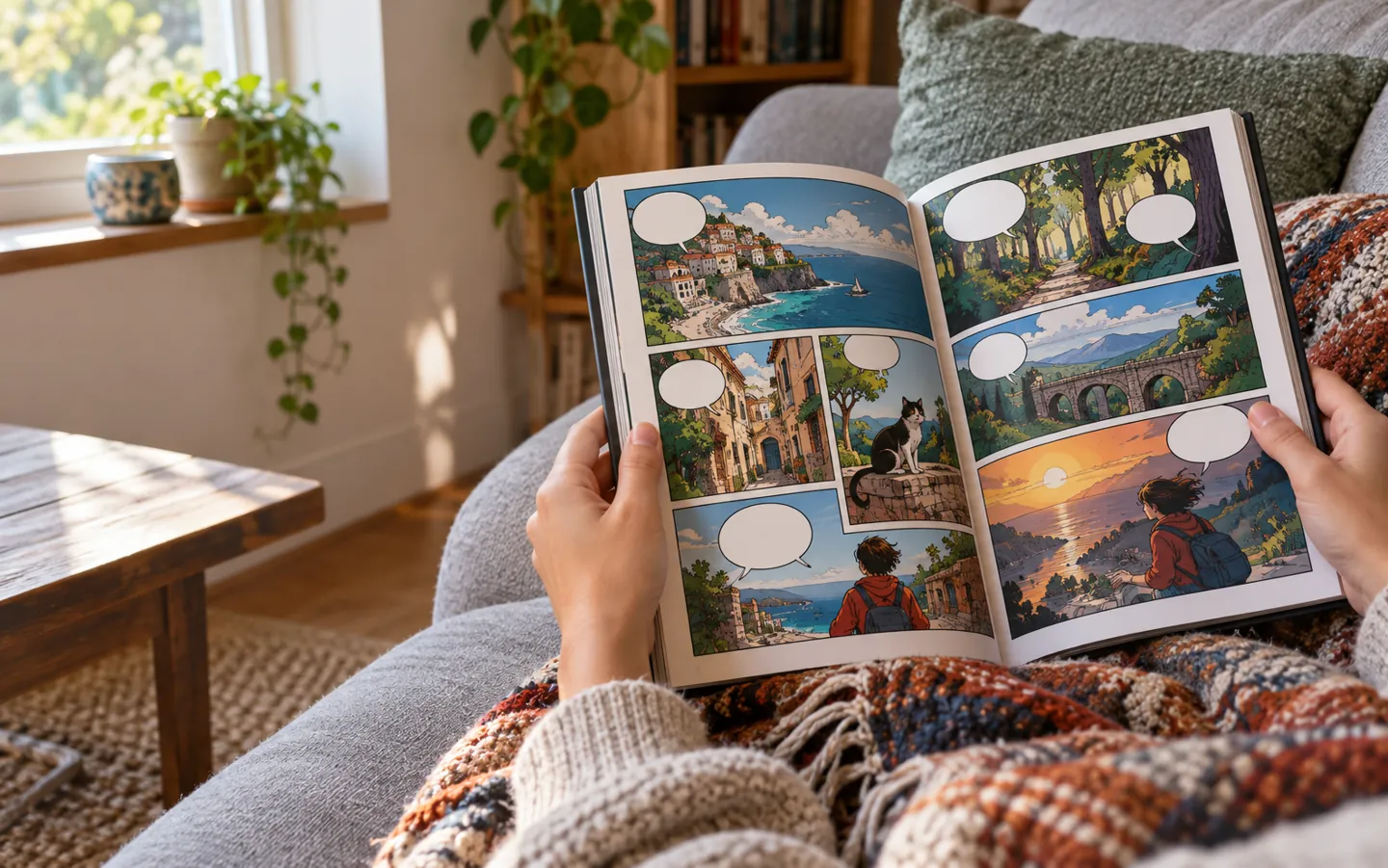
The National Literacy Trust's 2026 survey found that almost half of children and young people read comics or graphic novels in their free time at least once a month. Pictures and words work together, and the reader fills the gaps.
Choose a group to see what share of children and young people in it read comics or graphic novels in their free time at least once a month in 2026. The bar shows how high the share is.
Source: National Literacy Trust, Children and young people's engagement with comics (2026), from its Annual Literacy Survey.
TWO NUMBERS WORTH KNOWING
A ten-year high, mostly on paper.
One figure on how many read comics, one on how they read them.
45.7%
Read comics or graphic novels at least monthly
Comic reading changed little between 2022 and 2025, then rose by 7.5 percentage points in 2026, the highest level since the survey's 2017/18 figure of 39.9%.
FREE-TIME READING · NLT 2026
59.8%
Comic readers who read in print
Print was the most popular format. 24.6% read comics on screen and 15.6% across both. Reading grew in every format over the past year.
FORMAT · NLT 2026
The National Literacy Trust has run its Annual Literacy Survey every year since 2010. The comics report also drew on more than 700 young people's comments about why they enjoy comics.
FOUR THINGS TO LOOK FOR
How a strip tells a story.
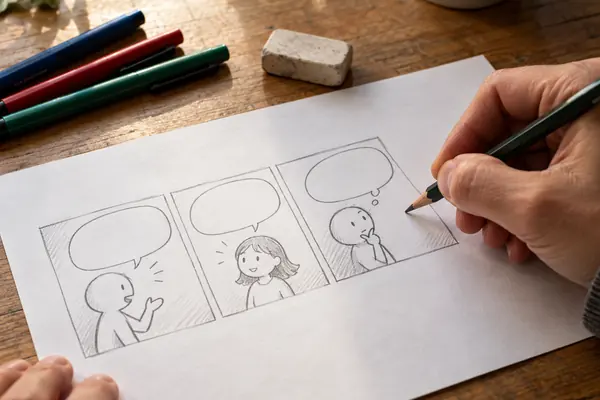
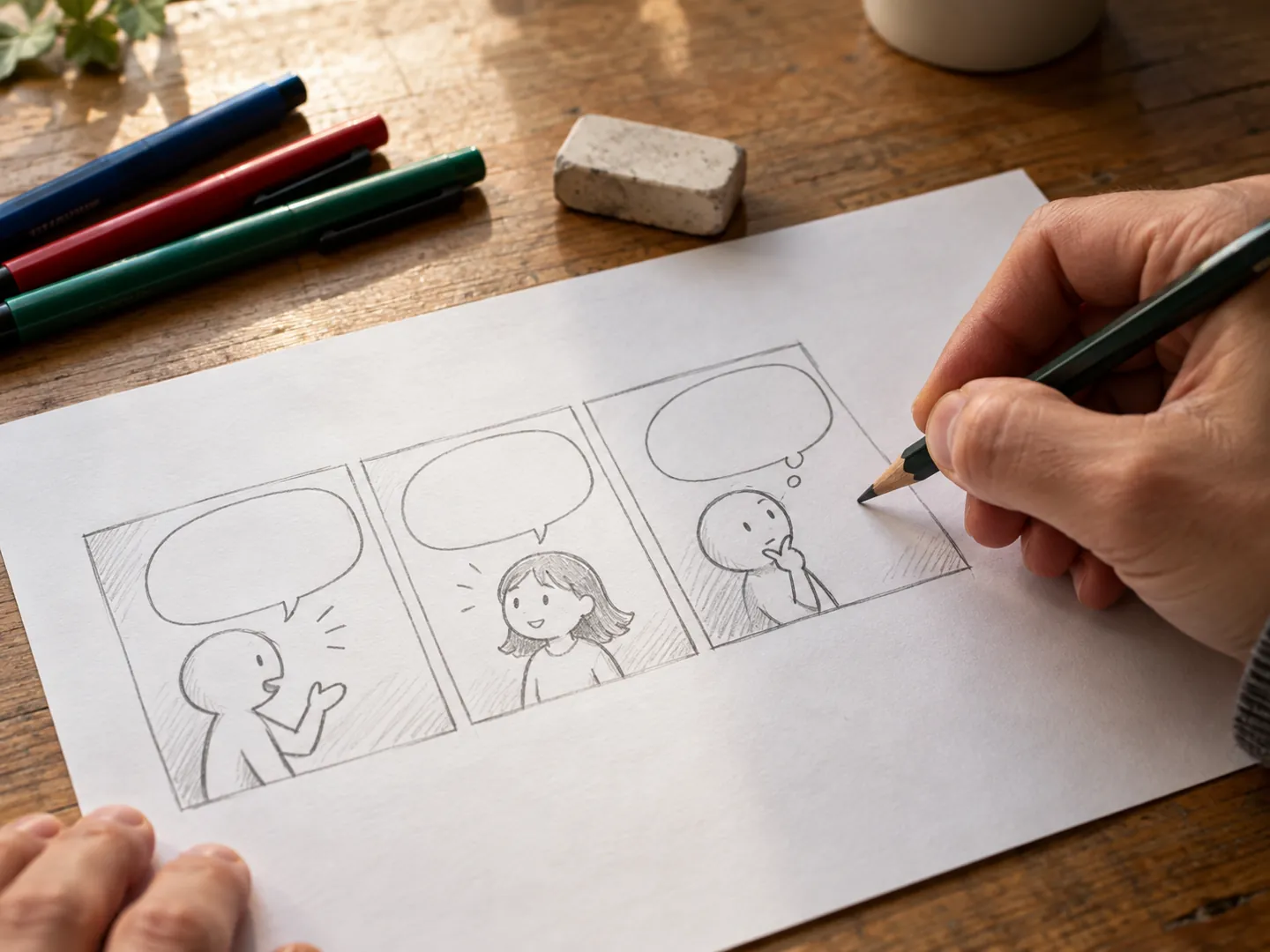
Comics have their own grammar. A Yale teaching unit on comics sets out the parts readers learn to use without thinking.
Panels
Each panel is a bordered frame. They come in all shapes and sizes, and a row of panels is called a tier.
Gutters
The gaps between panels stand for time. A wide gutter means more time has passed; a thin one means things happen fast.
Balloons
A jagged balloon means shouting, bubbles mean a thought rather than speech, and very tiny words mean a whisper.
Sound effects and captions
Sound effects use onomatopoeia and have no balloons. Captions usually sit outside the frame and carry the narrator's words.
AI-generated image, not a photograph of a real person or place.AI-generated image, not a photograph of a real person or place.
WHY THEY ENJOY THEM
Stories that feel within reach.
In more than 700 comments, young people said comics connect with their interests, bring stories to life visually, and pull them into immersive worlds.
Some said illustrations and shorter sections of text make reading feel more manageable, and many said comics help them relax. That matters: in 2025 only 32.7% of 8 to 18 year olds said they enjoyed reading in their free time, the lowest in 20 years.
Questions
Questions people ask
How many children read comics?
In the National Literacy Trust's 2026 survey, 45.7% of children and young people said they read comics or graphic novels in their free time at least once a month, the highest level since 2017.
Do children prefer print or digital comics?
Print. Among comic readers, 59.8% read them in print, 24.6% on screen and 15.6% in both formats.
Do boys read more comics than girls?
Yes, 49.9% of boys against 40.7% of girls in 2026. But the gap has halved since 2017, from 18.2 to 9.2 percentage points, because more girls are reading comics.
What is the gutter in a comic?
It is the space between panels. It stands for time: the wider the gutter, the more time has passed between one panel and the next.
Why do young people say they enjoy comics?
They said comics connect with their interests, bring stories to life visually, are immersive, make reading feel more accessible and help them relax.